English


How Do You "Copyright" a Business Name? You Don't, Here's Why
At a glance: If you have been searching for ways to copyright your business name, you are looking for the wrong type of protection. Business names are protected through trademarks, not copyright, which means the right path is to check availability, file for trademark protection, and secure your brand before someone else does.
Table of Contents
- Why People Think They Can Copyright a Business Name
- Why You Cannot Copyright a Business Name
- What Actually Protects a Business Name? (Trademark Essentials)
- How to Protect a Business Name and a Logo
- Your Protection Path: How to Secure Your Brand Name
- When You Should Move on Trademarking Your Name
- FAQs about Protecting a Business Name
- Final Takeaway: Pivot from Copyright to Trademark
If you're searching for ways to copyright your business name or wondering how to get copyright protection for your brand, you're not alone. Thousands of entrepreneurs type similar questions every month, and almost all of them are looking for the wrong solution.
Short answer: You cannot copyright a business name. Business names, brand names, and company names are protected with trademarks, not copyright.
But don't worry, this guide explains why these terms get confused, what you can protect, and how to secure your business name the right way.
Why People Think They Can Copyright a Business Name
It's not your fault if you've been searching for "copyright protection for my brand" or similar terms. The confusion between copyright and trademark is incredibly common, and here's why:
Pop culture uses "copyright" as a catch-all term. You've probably heard people say "that's copyrighted" when referring to any type of intellectual property protection, from song titles to brand names to inventions.
Business registration feels like "copyrighting." When you file paperwork to form an LLC or register with your state, it can feel like you're officially "copyrighting" your business. You're not—you're just creating a legal entity.
The terms sound similar and both involve registration. Both copyright and trademark can be registered with government offices, which adds to the confusion about which one does what.
The truth is simpler than you think: these are two completely different legal tools designed for different purposes.
Why You Cannot Copyright a Business Name
The fundamental reason comes down to legal function. Copyright and trademark protect different things because they serve different purposes in the marketplace.
The 60-Second Rule of Thumb (What Protects What)
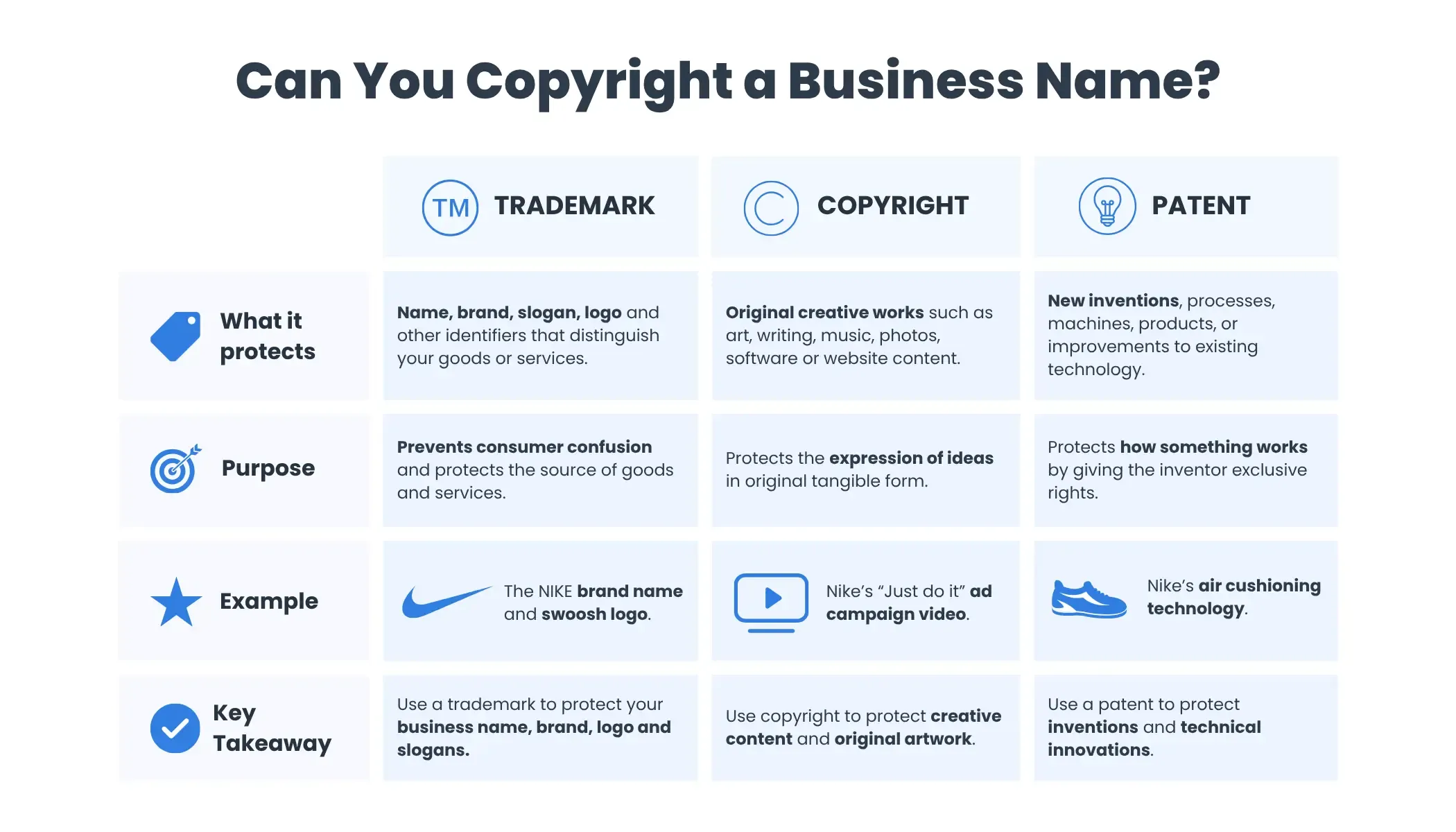
Because a business name is a source identifier used in commerce and not a creative work of authorship, copyright simply cannot apply.
This is why the answer to "can I copyright my business name?" is always: No, copyright is not the right tool.
To protect a business name, you need a trademark, not a copyright.
Understand the legal distinction in our guide: What's the difference between trademark and copyright?
What Actually Protects a Business Name? (Trademark Essentials)
If you've been wondering how to get copyright for your business, the legal mechanism you actually need is trademark registration.
What a Trademark Does
A trademark is the single most important tool for protecting your brand identity. It gives you the right to exclusive use of that name in connection with the goods and services you offer.
- A trademark legally secures your: Business name, brand name, logos, and slogans.
- A trademark enables you to: Stop others from using a confusingly similar name, legally expand your brand, and qualify for programs like Amazon Brand Registry.
In short: a trademark stops brand confusion and protects your market position, while copyright protects creative works like art and written content.
To learn all about this, visit our Trademark Guide
What Happens If You Skip Trademark Protection
Many beginners assume that forming an LLC or registering with their state is enough. It's not. Here's what can happen without trademark protection:
- Someone else files first: Another business in a different state (or country) can register "your" name as a trademark, giving them superior legal rights.
- You can't stop copycats: Without a registered trademark, you have limited ability to prevent competitors from using similar names or confusing your customers.
- Costly rebranding: After investing thousands in marketing, packaging, and websites, you may be forced to change your entire brand identity if someone with superior rights demands it.
- Lost business opportunities: You can't join Amazon Brand Registry, enforce your rights on social media platforms, or license your brand without trademark registration.
Think of trademark registration as insurance for your brand's future.
How to Protect a Business Name and a Logo
Many beginners search for ways to "copyright" their logo and business name, and this is the one scenario where both types of intellectual property might be involved, but in different ways:
- The Name: The name itself is always trademarked (as the source identifier for your business).
- The Logo: A logo with artistic elements can be protected by copyright (as an original artwork), and it should also be protected by trademark (as a brand symbol).
The Key Point: To prevent competitors from using a similar brand identity and confusing your customers, you primarily rely on your trademark rights. Copyright protects your ownership of the creative design, but trademark is what stops marketplace confusion and protects your brand reputation.
For most businesses, trademark registration is the essential protection, copyright for logos is secondary.
Your Protection Path: How to Secure Your Brand Name
Here are the 4 steps to protect your business name properly:
1. Run a Clearance Search
Before spending any time or money, you must ensure your name is actually available for use. This means looking beyond exact matches and checking for names that sound alike, look alike, or are used for similar products or services. Skipping this clearance step is the single most common reason for costly rebranding later on.
💡 Tip: Distinctive names (made-up words or names unrelated to your product) are much stronger and easier to protect than descriptive names (e.g., "Quality Coffee Shop" vs. "Zephyra").
2. File Your Trademark Application
This is the crucial step where you officially submit your claim for ownership. When you file, you must clearly define two things:
-
What you are protecting: A Word Mark (the name alone, which is often the strongest starting point) or a Design Mark (the logo design).
-
What you are selling: You must choose the specific categories of goods and services your name will cover, which is done using the Nice Classification system.
Filing the application is the action you take to secure legal exclusivity, and defining your goods and services correctly is essential to ensure your protection is broad enough for your business plans.
💡Learn more about the complete filing process in our guide: How Do I Trademark a Name?
3. Lock Down Online Assets
Register your domain names and social media handles that match your brand. While this isn't a legal intellectual property filing, it's essential for avoiding brand confusion and preventing cybersquatting.
4. Monitor and Maintain
Brand protection is not a one-time process. Set up a trademark monitoring protocol to catch similar names trying to register later, and plan for your scheduled renewals to keep your registration active (every 10 years in most jurisdictions).
When You Should Move on Trademarking Your Name
To secure your business and prepare for growth, you should register a trademark immediately if:
- You sell any products or services online or across state lines.
- You plan to grow, hire employees, or enter new geographic markets.
- You need to join Amazon Brand Registry or other brand protection programs.
- You want the legal standing to stop others from copying your business identity.
- You're investing in marketing, packaging, or building brand recognition.
Copyright cannot do any of this, only trademark registration can.
FAQs about Protecting a Business Name
Can I copyright my business name?
No, that's not possible. Copyright is exclusively for creative works (like books, music, or art), not business identities. You must use a trademark to protect a business name.
How do I get copyright protection for my business name and logo?
You cannot copyright the name itself. While the artistic elements of your logo may qualify for copyright protection, you need a trademark registration for both the name and logo to secure genuine brand protection in the marketplace.
Do you copyright or trademark a business name?
You always trademark a business name. Think of a trademark as the legal tool specifically designed to protect your brand's identity and prevent customer confusion.
Is a business license the same as copyright protection?
No. A business license is a permit to operate in your city or county. An LLC or corporation filing is a legal entity formation with your state. Neither of these provides any intellectual property protection for your business name. Only a trademark protects your name from being used by competitors.
Can someone steal my business name if I just have an LLC?
Yes. Forming an LLC only registers your business entity with your state—it does not give you trademark rights. Someone in another state (or even your own state) could register a confusingly similar name as a trademark, potentially forcing you to rebrand. LLC registration and trademark registration are completely separate processes.
Do logos need to be copyrighted?
They can be protected by copyright (as original artwork), but for preventing brand confusion and stopping competitors from copying your visual identity, trademark registration is the most crucial form of protection. Most serious businesses pursue trademark registration for their logo rather than relying solely on copyright.
How do I get my brand copyrighted?
If you mean protecting your brand name, you need to file a trademark application—copyright does not apply. If you mean protecting the creative content (like the logo design, website graphics, or marketing videos), that falls under copyright, which exists automatically when you create original work but can be registered for stronger protection.
How can I secure my business name?
The correct way is to run a thorough clearance search first, and then formally register your name as a trademark with the USPTO (in the United States) or the equivalent trademark office in the country or region where you do business.
Final Takeaway: Pivot from Copyright to Trademark
If your goal has been to protect your business name with copyright, your next step is clear: trademark registration.
Don't risk building your brand on shaky ground. The investment you make in trademark protection today prevents the costly heartbreak of rebranding tomorrow and gives you the legal foundation to scale with confidence.
Feeling overwhelmed by the process?
You're not alone. Trademark law has nuances that can trip up even experienced business owners. The good news? You don't have to figure this out on your own.
Ready to protect your brand the right way?
Start with a professional trademark search to validate your name is available, or talk to a trademark specialist who can walk you through every step in plain language and handle the filing for you.